![]()

 Gott Mit Uns: Zen at War
Aware of its irony, Ernest Hemingway wore a belt, from a dead WW I German soldier, with the inscription,
Gott mitt uns. (
God is on our side.) God is on the side of the Germans, on the side of the French, on the side of the British, on the side of the Americans, on the side of the Chinese, on the side of the Japanese. . . .
*
In
Zen at War, what Brian Victoria reveals about Zen should surprise only those who regard it as some kind of holy grail, separate and apart from sordid humankind. The evils of Japan in World War II were nothing new in Zen history, nor in the history of humankind. What may be new to seekers is the realization that enlightenment promises no higher, holier, privileged moral position above the follies and evils of the world. As it always has, morality requires a response grounded in human character and belief in decency for its own sake.
A Soto Zen priest, Victoria reveals Zen history and teaching as violent and its ethics as not always wise. He does not regard Zen as true to Buddhist tradition. A professor at Auckland University, New Zealand, 30 years a Soto priest, his interest is not casual.
In his book, Victoria gives us a different Zen. His version has real people, real egos, and real folly. They are not old men passing on words of wisdom to the young. Consider this by Harada Roshi in 1939: "If ordered to march: tramp, tramp or shoot: bang, bang. This is the manifestation of the highest wisdom of enlightenment. The unity of Zen and war . . . extends to the farthest reaches of the holy war now under way."
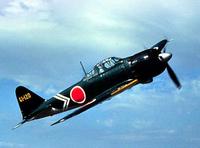
The so-called higher wisdom of Zen does not exempt it from the same self-righteousness that prevailed during the Crusades, Christianity against Islam, Islam against Christianity. During World War II, Japan had 70,000 temples, and 200,000 monks and nuns. Nobody protested Japan's barbarisms. Zen Buddhists were deeply involved with the Imperial Japanese War Machine.
History shapes all institutions, be they fascist, communist, democratic, or Zen Buddhist. They and their institutional consciousness become representative of the
status quo. It is historical determinism. Even enlightenment experiences allow few exceptions. This partly, not wholly, results from Zen teachings in which the truly enlightened being is devoid of sentimentality. Traditional Japanese Zen is highly regimented, with rigorous training and discipline. In that regard,
samadhi, heightened mental, or spiritual power, also plays a role. With
samadhi, mind can be put to whatever purpose its owner wishes, including martial arts for warrior practitioners, all in service of a state's place in history.
Originally a meditative practice from China, Zen took root in medieval Japan and changed as it came under protection of the state. Zen was introduced in the Kamakura period with the warrior class in control, as they were for the next 700 years. To become assimilated, Zen catered to the warrior class. Behind monastery walls Samurai warriors learned how to meditate and practice war. Zen monasteries helped evolve the Bushido code.
Bushi means
warrior;
do means
the way. Thus
the way of the warrior, a code of conduct, arose in the 17th and 18th centuries as an art of killing. Killing with philosophy and in a meditative state of mind.
DT Suzuki made Zen available to the West. From Jack Kerouac and the Beatnik poets to the present day, his books sowed the seeds of Zen as a cultural icon. Zen entered the mainstream with titles such as
The Dharma Bums, Zen and The Art of Motorcycle Maintenance, Zen and The Art of Tennis, Finding Your Zen Space. In his own books, Suzuki mentions little of the relationship between Zen and the state. In one work, he writes of the duty of fascists to be good fascists, of citizens to be loyal. (See Zen fighter planes, 25 June 2005.) In 1896 he published in Japan a book titled
New Religion, in which he stated "the first duty of religion is to preserve the existence of the state," calling all foreigners "unruly heathens" who might interfere with this duty of any loyal Japanese. Killing these heathens would be a religious act.
In 1937 the second holocaust occurred, a horrific human disaster, one the public knows little about. Its history was silenced by the Machiavellian need for amicable post-war relations between the United States and Japan. The Rape of Nanking sank human evil and cruelty to a new low. (See my article on
The Rape of Nanking, 5 December, Inveterate Bystander II.) It occurred during the Japanese invasion of Nanking, in which between 200,000 and 300,000 Chinese men, women, and children were raped, brutalized, and massacred. Did DT Suzuki, the venerable sage of Zen protest it? Shortly after the Rape, he had this to say: " The art of swordsmanship distinguishes between the sword that kills and the sword that gives life. The one that is used by a technician cannot go any further than killing. The case is altogether different with the one who is compelled to lift the sword, for it is really not he but the sword itself that does the killing. He has no desire to harm anybody, but the enemy appears and makes himself a victim. It is though the sword automatically performs its function of justice, which is the function of mercy, the swordsman turns into an artist of the first grade, engaged in producing a work of genuine originality. "
Not he but the sword that does the killing? Marvelous. Thereby all blood stains are washed clean.
Japanese Zen accomplished this perversion by manipulating the mind in the fashion of a koan. Originated as a religion of peace, Buddhism has a precept forbidding killing. In the early 20th Century war against Russia, a Zen patriarch said, " Whether one kills or does not kill, the precept of forbidding killing is preserved." In this manner, Zen developed a hard line by softening reason.
By using the concept of enlightenment any sage in any religion can teach that black is white, and white, black, so that morality is subverted. The argument might follow these lines: Everything changes; all is essentially empty. The self is empty. Ergo, killing is empty. If empty, the precept against it is also empty.
By such dialectic the ancient koan dealing with Nansen's Cat can be extended to human beings. Nansen could as easily have said to the Zen students, If you don't answer now, I will cut this man in half.
Our consciences are individual, not national. For man to become men, we must practice prudence on a long-term lease. We must avoid easy, dogmatic, doctrinal answers to existence, including those offered us by the state and by religion.
* (The War Prayer, by Mark Twain:
O Lord our Father, our young patriots, idols of our hearts, go forth to battle--be Thou near them! With them--in spirit--we also go forth from the sweet peace of our beloved firesides to smite the foe. O Lord our God, help us to tear their soldiers to bloody shreds with our shells; help us to cover their smiling fields with the pale forms of their patriot dead; help us to drown the thunder of the guns with shrieks of their wounded, writhing in pain; help us to lay waste their humble homes with hurricanes of fire; help us to wring the hearts of their unoffending widows with unavailing grief; help us to turn them out roofless with their little children to wander unfriended the wastes of their desolated land in rags and hunger and thirst, sports of the sun flames of summer and the icy winds of winter, broken in spirit, worn with travail, imploring Thee for the refuge of the grave and denied it--for our sakes who adore Thee, Lord, blast their hopes, blight their lives, protract their bitter pilgrimage, make heavy their steps, water their way with tears, stain the white snow with the blood of their wounded feet! We ask it, in the spirit of love, of Him Who is the Source of Love, and Who is the ever-faithful refuge and friend of all that are sore beset and seek His aid with humble and contrite hearts. Amen.)

 John Rabe (1882-1950) was a remarkable man whose story should be spread far and wide. A Nazi party member, he was deeply human and saved countless lives during the Rape of Nanking by the Japanese Imperial Army. Like so many others, he believed that Hitler provided a future for Germany. Living in China, he was unaware of the Brown Shirts, the SS, and the Gestapo. Employed by Siemans he was witness to history as the Japanese invaded China. In what is now Nanjing (Nanking), he established an International Safety Zone to shelter some 200,000 Chinese people from slaughter during the massacre.

